Holiday Marketing Plan 2026: How Local Businesses Win Early
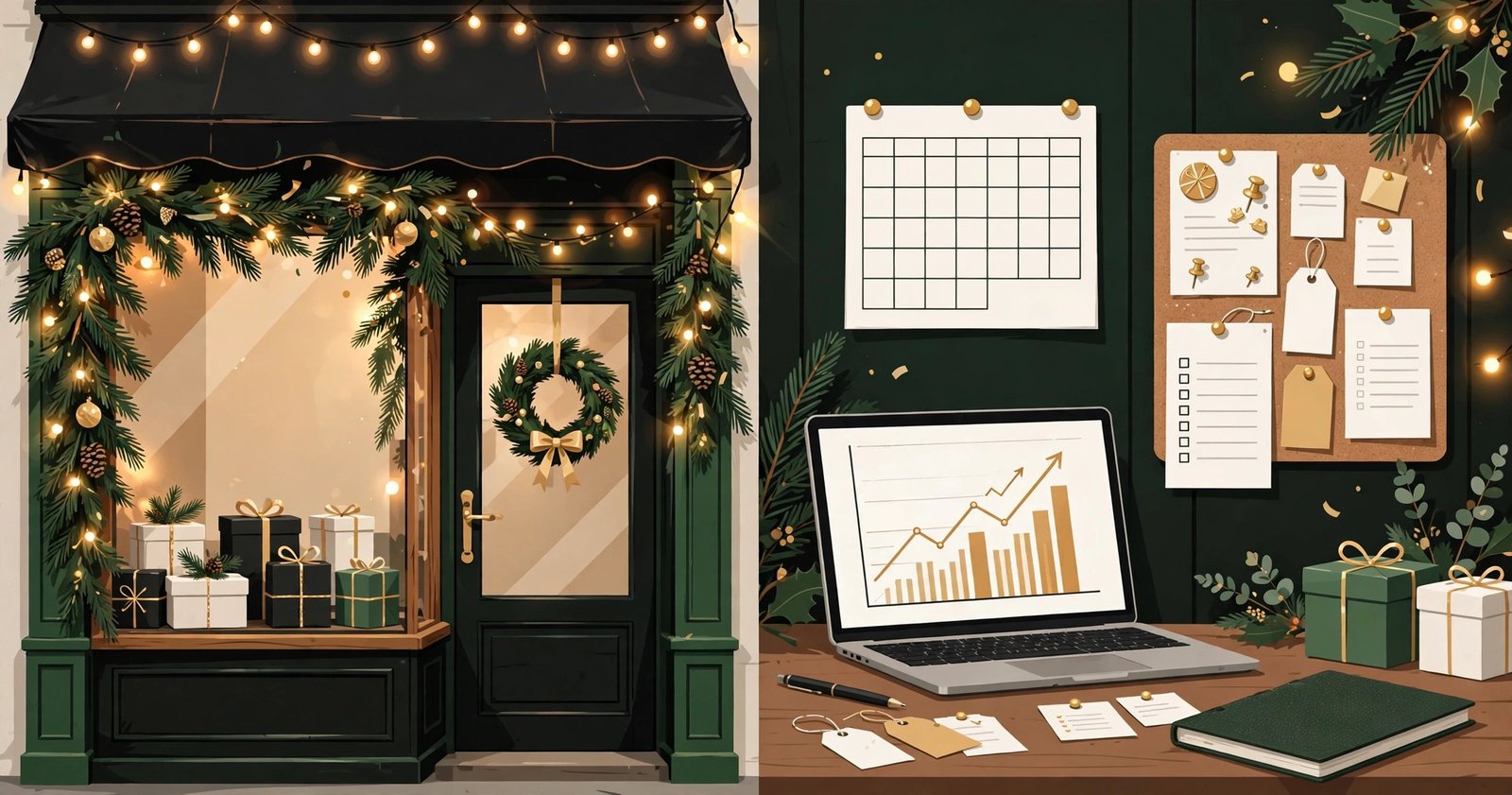
When should a small business start its holiday marketing? Before November. About four in ten holiday shoppers start buying early, so a holiday marketing plan for small business owners should be built in October: one clear seasonal offer, an email and SMS list ready to send, and gift guides published where shoppers and AI assistants can find them.
When should you start holiday marketing in 2026?
October is the month to build, not December. Valpak's 2026 holiday shopping survey found that 38% of shoppers plan to host a holiday gathering this year, and most hosts expect to spend $100-249 (36%) or $250-499 (35%) on food and entertaining. The most-wanted sources of local holiday offers are grocery stores (51%), restaurants and catering (43%), and bakeries (32%). An Austin bakery promoting holiday pie preorders in mid-October reaches those hosts before the rush.
What offers actually move holiday shoppers?
Money talks first. A consumer survey found that 58% of shoppers say receiving coupon codes is the tactic most likely to get them to buy. That beats clever branding every time. Make your holiday deal a real, dollar-off coupon with a short code customers can use in store or online, and put the savings in the headline, not the fine print, as the Valpak 2026 holiday trends report shows.
Scarcity helps too, but only on things people actually want. Pick one signature seasonal hero product instead of discounting everything, then make it the star of every message.
Which marketing channels work best for the holidays?
Two-thirds of shoppers (65%) use their phones to browse, compare prices, and buy, and 52% plan to shop both online and in-store. Messages to people who already know you beat ads. Here is how the channels compare:
| Channel | Why it wins this season |
|---|---|
| 40% of shoppers act on sale reminders by email; you own the list and pay nothing per send | |
| SMS | 31% buy after sale reminders by text; nearly everyone opens texts within minutes |
| Coupon codes | 58% say coupon codes are the tactic most likely to get them to buy |
| In-store and local pickup | Convenient location is the top reason shoppers pick local businesses (36%); 52% shop both online and in-store |
| Social media | Strong for storytelling and gift guides, but weaker than email and SMS at closing holiday sales |
The pattern is clear: sale reminders by email (40%) and SMS (31%) beat social media ads and influencer recommendations for actually driving purchases. Build the list before the season, not during it.
How do local businesses compete with big-box stores?
You do not compete on price alone, so do not try. Shoppers pick local businesses for convenient location, compelling offers, and unique gifts. Share real founder storytelling: why the product exists, who makes it, what holiday it was built for. That story turns a gift box into a gift people are proud to give.
Then remove every friction a big store still has. Offer local pickup or same-day delivery so last-minute shoppers choose you instead of waiting on shipping. Publish gift guides and clear product information early, because holiday shoppers are already asking AI assistants what to buy, and businesses that publish gift guides and clear product info early get cited before the season peaks, according to this marketing trends roundup.
What should your holiday marketing calendar look like?
A holiday marketing plan for small business owners only works if it has dates. Here is a simple seven-step calendar:
- Early October: pick your hero product. Choose one signature seasonal item, photograph it well, and set a clear price. Everything this season points to it.
- Mid-October: build your lists. Add a holiday email and SMS signup to your checkout and website, with a coupon as the reward for joining.
- Late October: publish gift guides. One page per gift category, with clear prices and simple descriptions that search engines and AI assistants can quote.
- Early November: send the first offer. Your best coupon goes to the list first. Reward the people who shared their contact details.
- Thanksgiving weekend: go big. Email and SMS daily through the weekend, with the coupon code in the subject line and dollars saved up front.
- December: sell convenience. Push local pickup and same-day delivery for last-minute shoppers. An Auckland flower shop wins December with "order by 2 pm, delivered today."
- January: follow up. Thank holiday buyers, ask for reviews, and offer a small New Year coupon that brings them back.
A holiday marketing plan for small business owners like this takes one focused week in October to set up, then runs mostly on scheduled sends. Synthvora Growth builds these seasonal campaigns for local businesses; more guides are at synthvoragrowth.com.
Frequently asked questions
When should a small business start holiday marketing?
Before November. About four in ten shoppers start buying early, so build your plan in October: pick one seasonal offer, get your email and SMS lists ready, and publish gift guides early.
What is the most effective holiday offer for a small business?
A coupon code that leads with dollars saved. 58% of shoppers say coupon codes are the tactic most likely to get them to buy, ahead of any branding or social media content.
Which channel drives the most holiday sales for local businesses?
Email and SMS. 40% of shoppers act on sale reminders by email and 31% on reminders by text, both ahead of social media ads and influencer recommendations.
How can a local shop compete with big-box holiday deals?
Lead with what chains cannot copy: convenient location, unique gifts, one signature hero product, local pickup or same-day delivery, and real founder storytelling.
What should a holiday gift guide include?
One page per gift category with clear prices and simple product descriptions. Publish early, because holiday shoppers are already asking AI assistants what to buy, and clear, early guides get cited.
Early planning turns the holidays from your most stressful season into your best one. Get a free audit of your holiday readiness, or contact us to build your campaign before November.
Planning your holiday marketing?
We help local businesses across the US, Canada, Australia and New Zealand plan holiday campaigns that start early and convert. Get an honest assessment.
Get My Free Audit