Why Email Marketing Beats Social Media for Small Businesses
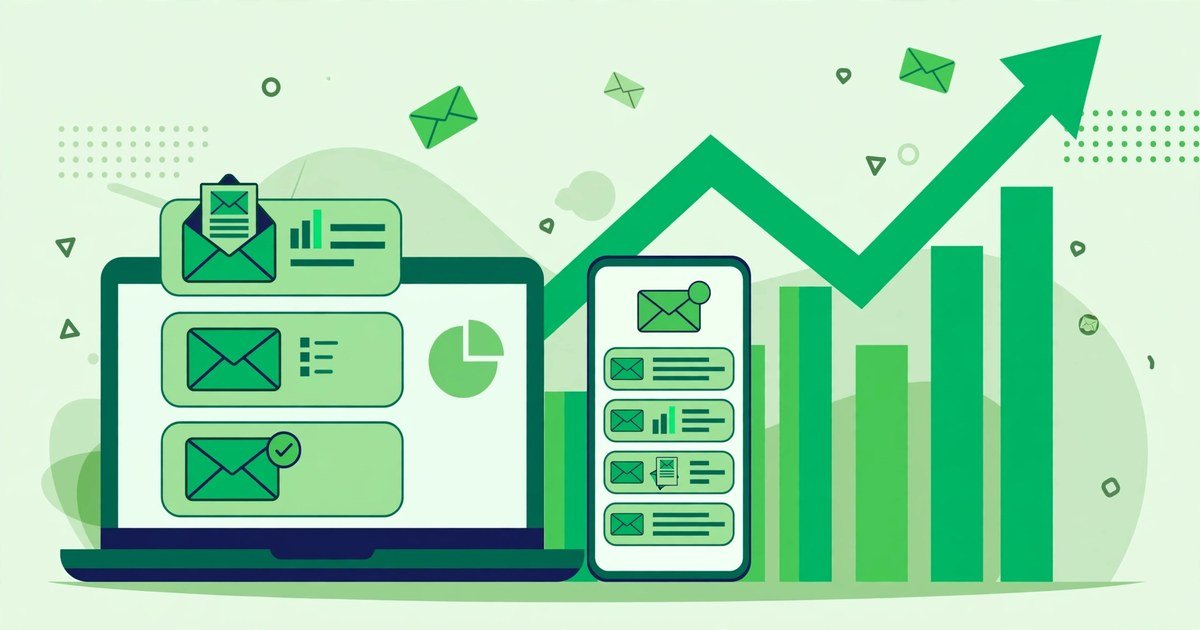
Email marketing beats social media for small businesses because you own your email list. Every $1 spent on email returns up to $42, compared to roughly $3 per dollar on social ads. Your messages land directly in inboxes you control, while social reach depends on algorithms that change without warning.
What do the 2026 numbers actually say?
The data is blunt. Email marketing returns $36 to $42 for every $1 spent, the highest-ROI digital channel for small businesses, per Litmus research summarized by EmailTooltester. Yet a 2026 DesignLoud survey found small businesses raised social ad budgets 22% while cutting email budgets 8%. Even so, email delivered the survey's highest channel ROI: 4.2-to-1 versus 2.8-to-1 for social.
That mismatch is the opportunity. A plumber in Austin, a florist in Toronto, a cafe in Sydney, or a gym in Auckland can all compete on email with just a laptop, while competing on social increasingly means paying for reach.
Why does owning your list matter so much?
Social platforms are rented land. Organic reach on Facebook and Instagram has shrunk for years, and a post can flop simply because the algorithm favored something else that day. Your email list is different: subscribers chose to hear from you, they gave you permission directly, and no algorithm stands between your message and their inbox.
Email is also a calmer channel. Someone scrolling social media is pulled in fifty directions. Someone reading your email has already decided your business is worth their attention. That difference in intent is why email converts so well.
How do you build an email list from zero?
Start with customers you already have. Ask for permission to add past customers to a newsletter; most happy customers say yes. Then add collection points everywhere a customer interacts with you:
- Website: a simple signup box with one clear benefit, like "Get monthly tips and subscriber-only offers." Place it in the footer and on the contact page, and make sure your website design gives it real visibility.
- Checkout or booking flow: a checkbox to receive updates. Most customers tick it without thinking.
- In store: a QR code at the counter linking to a signup page, or a simple paper list for older customers.
- Google Business Profile: post occasional reminders that your newsletter carries exclusive offers.
- Every email you send: ask one satisfied customer per week if you can add them. It compounds fast.
You do not need thousands of subscribers. A few hundred engaged emails consistently outperform ten thousand silent social followers.
What should a small business actually send?
Four email types cover almost everything a local business needs. Keep each email short and written to one real person, not "dear subscribers."
| Email type | What it contains | How often |
|---|---|---|
| Welcome email | Thanks them for signing up, sets expectations, one small offer | Automatically, right after signup |
| Useful update | A genuine tip related to your trade, seasonal advice, new product | Once or twice a month |
| Offer email | A real, time-limited deal for subscribers only | Monthly at most |
| Follow-up email | Thanks after a purchase, review request, service reminder | After each job or purchase |
A Toronto home cleaner might send a spring checklist in March and a holiday booking reminder in November. A Sydney surf shop might share one new board arrival per month plus a subscriber-only sale before summer. The pattern is the same: be useful first, sell second.
What keeps people subscribed instead of unsubscribing?
Three rules. First, send what you promised. If people signed up for tips, send tips, not daily sales pitches. Second, write personal subject lines; industry data shows personalized subject lines lift open rates by about 26%. Third, make every email readable on a phone, since around 61% of emails are opened on mobile devices, and include one clear call to action, which lifts click rates by about 37%.
Also clean your list. Remove addresses that bounce or never open anything after six months. A smaller, engaged list costs less, performs better, and keeps your emails out of spam folders.
How do you know if your email marketing is working?
Watch three numbers: open rate, click rate, and bookings attributed to email. Only 31% of small businesses actively analyze their marketing data monthly, so tracking these three puts you ahead of most competitors. If open rates fall, change your subject lines. If clicks fall, make the content more useful.
At Synthvora Growth, we set up simple email systems for small businesses across the US, Canada, Australia, and New Zealand: list collection, a welcome sequence, and a monthly rhythm their customers actually read. Email does not need a big budget. It needs consistency and honesty.
Frequently asked questions
Is email marketing still worth it for small businesses in 2026?
Yes. Email returns $36 to $42 per dollar spent, the highest ROI of any digital channel, and it keeps working even as social media algorithms change.
How many emails should a small business send per month?
Five to eight emails per month is linked to the highest ROI, but a steady two useful emails per month beats erratic bursts. Consistency matters more than volume.
How do I get my first 100 email subscribers?
Ask past customers for permission, add a signup box to your website and checkout flow, and put a QR code at your counter. Most local businesses reach 100 within a few months.
Should I buy an email list to start faster?
No. Purchased lists produce bounces, spam complaints, and almost no sales. Build your own list of real customers and interested locals instead.
Can email work for service businesses, not just shops?
Absolutely. Plumbers, cleaners, salons, and tradies use email for booking reminders, seasonal tips, and review requests. A cleaner in Toronto or an electrician in Auckland benefits exactly the same way.
If your email list is sitting unused, it is leaving money on the table. Get a free audit or contact us and we will set up a simple email rhythm for your business that customers actually open.
Is your email list sitting unused?
We set up simple email systems for small businesses that customers actually open. Get a free, honest assessment of where you stand.
Get My Free Audit